We regularly expand our everyday reality using digital technologies — and most of us do so without noticing. With artificial intelligence, this expansion can look like this: we communicate with an AI much as we would with another person. Because the AI takes on different roles, it lets us practise what is otherwise hard to practise — a difficult conversation, say, or a foreign language. Immersive technologies such as virtual reality go further: they place us in environments where we can act without our mistakes having consequences.
I develop such applications and test empirically whether they deliver what they promise. Among them are a mixed-reality simulator in which teachers train how to handle classroom disruptions, AI-based conversation partners that foster communicative participation, and an immersive virtual reality for enhancing well-being. All three have been tested together with the people they are made for.
I pass this knowledge on: in university teaching, in talks and workshops for teachers, school leaders and counselling professionals, and in working with institutions that develop digital learning formats. What counts is not the technology, but whether someone has learned something in the end.

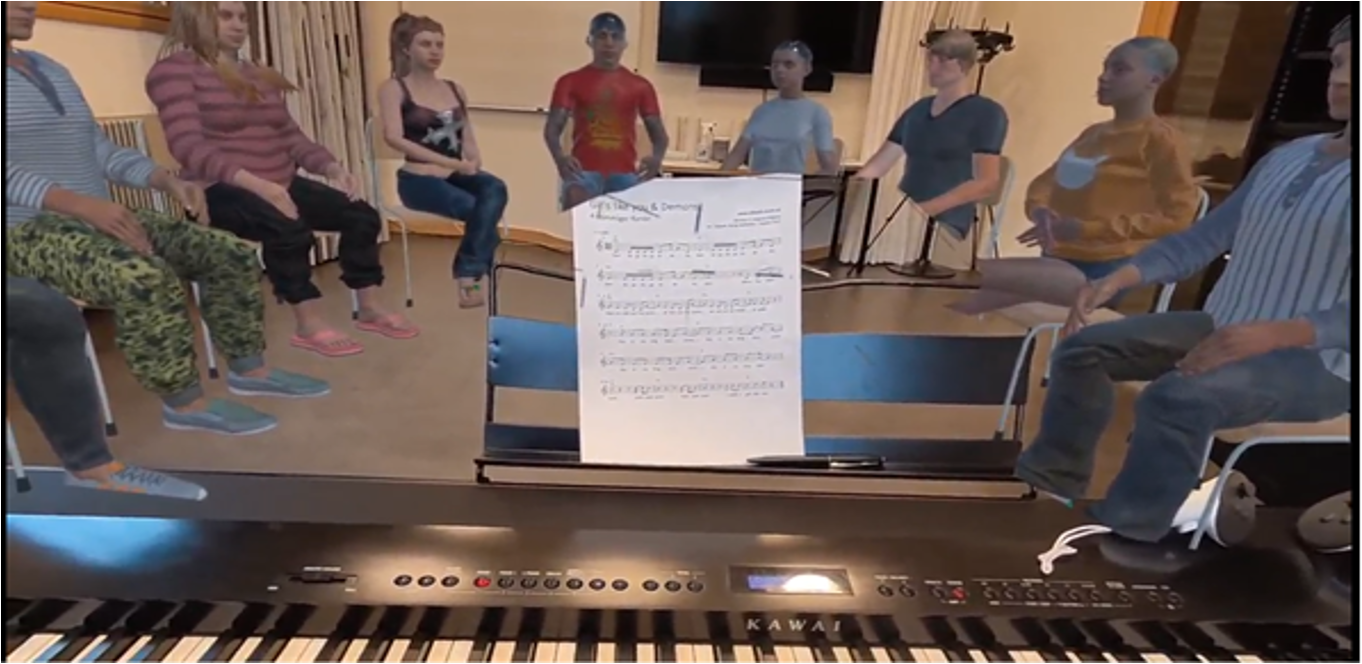
Fostering Learning

Fostering Participation
Fostering Well-Being